



GHK Basic (Tripeptide-1) 200MG
$147.00
GHK Basic (tripeptide-1) is Gly-His-Lys without copper. Content size is 200mg, in the form of lyophilized powder. Peptides are sold for laboratory research use only.
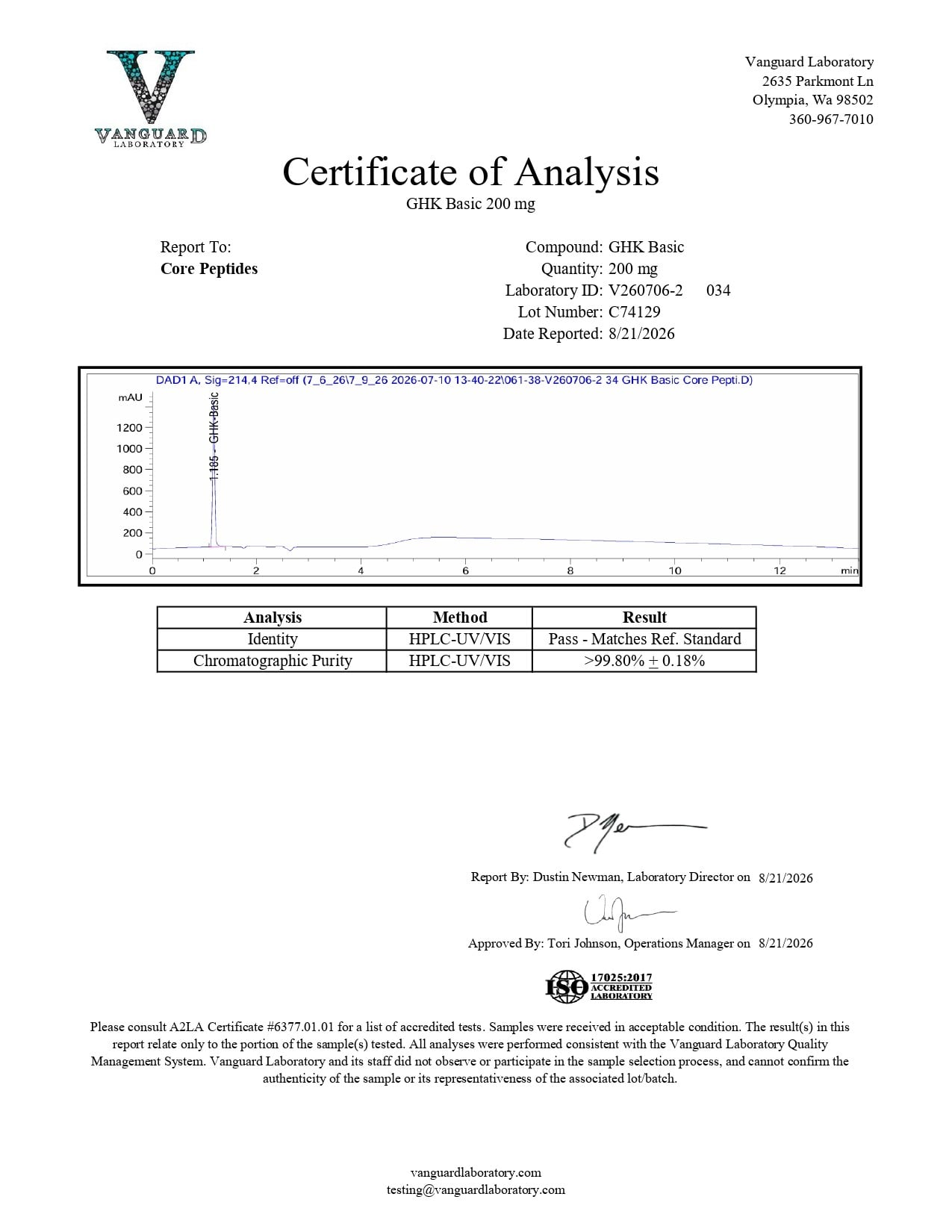
Purity: 99%+ by HPLC (third-party tested)
Tested by: Vanguard Laboratory, see Certificate of Analysis
SKU: P-GHK-TP-1
GHK Basic (Tripeptide-1) 200mg
GHK basic peptide is an endogenous copper peptide that occurs in the tripeptide glycyl-L-histidyl-L-lysine. It has two variants, GHK with or without Cu (Copper). GHK appears to have a strong affinity for copper (II), and it is synthesized from plasma, although it has been isolated in other areas. Endogenous GHK production is considered to decline over time.
In cases of injury, GHK may be released from tissue cells. That may be because GHK is present in various proteins that get broken down via hydrolysis during injury. For example, studies suggest that GHK is present in the “alpha 2(I) chain of type I collagen”, which “suggests that the tripeptide might be liberated by proteases at the site of a wound and exert in situ healing.” GHK peptide may also be released from the breakdown of another extracellular matrix-binding protein involved in regulating cell shape and proliferation, called SPARC (Secreted Protein, Acidic, and Rich in Cysteine). GHK is found in tissues undergoing remodeling, such as during the process of angiogenesis.
When GHK is released from the breakdown of proteins like collagen and SPARC, this signaling appears to trigger the fibroblasts to begin synthesizing new collagen and other structural proteins in the skin structure and connective tissues like elastin and glycosaminoglycan. Further, this copper-binding peptide appears to affect genes that control recuperative responses to injury and stress. Its functions appear to include the following: tissue remodeling, anti-inflammatory response, pain perception inhibition, nootropic, anti-cancer action, blood vessel growth, and nerve outgrowth.
GHK and GHK-Cu
GHK has a sequence inherent in SPARC protein and collagen molecules. Copper, on the other hand, is a transitional element of utmost importance to organisms with a cell membrane, extending from microorganisms upwards. Sequel to its conversion from oxidized -Cu (II) to reduced -Cu (I), it is considered to be a vital cofactor in a series of biochemical reactions accompanied by electron transfer. The changes in copper oxidation state may be an advantage. As dozens of enzymes may adopt it in catalyzing critical biochemical reactions such as detoxification, blood clotting, cellular respiration, antioxidant defense, and connective tissue regeneration. Copper also appears to be vital in iron metabolism and embryonic development, potentially essential for most metabolic reactions that occur in fetal development, oxygenation, and other biological processes.
Reviews
There are no reviews yet.